Insights on Cryptography, Quantum Readiness, and Security Strategy
Analysis, research, and practical guidance on cryptographic posture management, post-quantum security, and emerging risks shaping modern security programs.

Tags:

The Peggy Smedley Show: Quantum Threats and Benefits
On April 24, ISARA Corporation's VP of Business Development, Paul Lucier, was invited to join The Peggy Smedley Show - one of the most influential, Internet of Things (IoT) podcasts discussing relevant tech trends – with Peggy Smedley.


ITU-T Update: Mark Pecen and Alex Truskovsky Talk Quantum-Safe X.509 Certificates
In April 2018, at the ITU-T Headquarters in Geneva, Matthew Dalais of ITU interviewed Mark Pecen, Chief Executive Officer, and Alexander Truskovsky, Senior Product Manager, about quantum-safe X.509 digital certificates and the most recent revision of this key standard in the public key infrastructure.

Transforming PKI Migrations: Unlocking the Power of Crypto-Agility with Quantum-Safe Multiple Algorithm Certificates
Crypto-agility is the key to cost-effectively migrate information and communication technology (ICT) systems from legacy to quantum-safe systems. By using our unique dual algorithm approach to certificates, this is possible for large organizations and governments.

ISARA Radiate™ Security Solution Suite 1.4 Brings XMSS to Complete its Offering of Stateful Hash-Based Signatures for Quantum-Safe Roots of Trust
With the latest release of the ISARA Radiate™ Security Solution Suite, we’ve added stateful hash-based signatures, specifically eXtended Merkle Signature Scheme (XMSS), to the cryptographic library. With this addition, we now offer complete stateful hash-based signature algorithm support. Also, using…
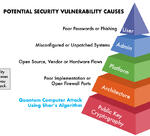
How Quantum Computing’s Threat to Security is Different from All Other Security Breaches
The quantum threat represents the first time in history that a cybersecurity breach will be the result of a complete break of modern public-key cryptography. For many, this information might come as a surprise. There seems to be a new security breach almost every day; in January 2018 a bug was discovered…
From Research to Action
Understanding cryptographic risk is only the first step. Organizations use these resources to inform cryptographic discovery, posture assessment, remediation planning, and quantum-safe migration strategies aligned with real-world constraints.

Every Environment Is Different
If your cryptographic exposure isn't fully clear, a short working session can help pinpoint priorities and outline practical next steps.