Insights on Cryptography, Quantum Readiness, and Security Strategy
Analysis, research, and practical guidance on cryptographic posture management, post-quantum security, and emerging risks shaping modern security programs.

Tags:

The Georgian Impact Podcast: "Quantum Computing and Tomorrow's Problems Today"
Quantum technologies are still in the early stages of development. Large-scale quantum computers capable of breaking the security of today’s online communications are predicted to be eight to ten years away. So, why is your data already at risk?

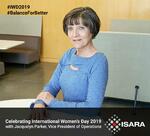
International Women’s Day 2019: Jacquelyn Parker created her own path, with tenacity and by trusting her instincts
Jacquelyn Parker, ISARA’s Vice President of Operations, has always carved out her own path, both professionally and personally. When others told her something couldn’t be done, she found a way. Her tenacity and love of lifelong learning have taken her down many paths in her career, culminating in a highly…

NIST Round Two: One Step Closer to Standardization
Best practices for cryptography evolve with time, and staying secure sometimes requires immediate reaction. The transition to Elliptic Curve Cryptography specified by the US National Security Agency's 2005 "Suite B" recommendation included a comfortable transition period. However, in August 2015, the…

Quantum Key Distribution and Quantum-Safe Cryptography: two (complementary) approaches to becoming quantum-ready
Every advancement in quantum computing brings us closer to the positive and negative disruptions this revolutionary technology promises. Though a large-scale quantum computer is not here yet, its future arrival already puts many aspects of information security at risk today because of “harvest-and-decrypt”…

We’re on a mission to create a quantum-safe world
On November 19th, we announced the exciting news that we raised $10 million USD in Series A funding led by Shasta Ventures. This is in addition to an initial capital investment of $11.5 million USD from Quantum Valley Investments. Subsequently, I’d like to officially welcome Nitin Chopra, Partner at…
From Research to Action
Understanding cryptographic risk is only the first step. Organizations use these resources to inform cryptographic discovery, posture assessment, remediation planning, and quantum-safe migration strategies aligned with real-world constraints.

Every Environment Is Different
If your cryptographic exposure isn't fully clear, a short working session can help pinpoint priorities and outline practical next steps.